wonach suchst du?

Technical Deployment Guide | Semiconductor Cleanroom
A prefabricated cleanroom can shorten semiconductor project schedules, but it still has to be engineered, installed and qualified as a controlled cleanroom envelope. The critical questions are not only panel speed and module delivery; they are airflow path, ACH assumptions, pressure zoning, leakage control and verification readiness.
prefab cleanroom semiconductor cleanroom pressure zoning cleanroom envelope
| PrefabBuild repeatable wall, ceiling and service interfaces. | ACHUse air changes as design input, not as proof of class. | PressureDefine room-to-room cascade and leakage paths. | Start-upPlan IQ/OQ style checks before panels ship. |
For semiconductor facilities, prefabrication is useful when the cleanroom package is treated as a controlled system: panel joints, raised floor return, FFU or AHU supply, pressure cascade, door interlocks, service penetrations and commissioning records must all fit the same design intent.
Deployment Logic
A prefab cleanroom does not remove design work; it moves much of the coordination earlier. Semiconductor owners should freeze room classification targets, tool heat loads, AMC sensitivity, process exhaust, return-air strategy, service penetrations and access routes before the wall and ceiling package is fabricated.
ISO 14644-4 addresses cleanroom design, construction and start-up. For prefabricated cleanrooms, this means module drawings, panel elevations, ceiling grids, door schedules and commissioning responsibilities should be reviewed as one package, not as separate construction trades.
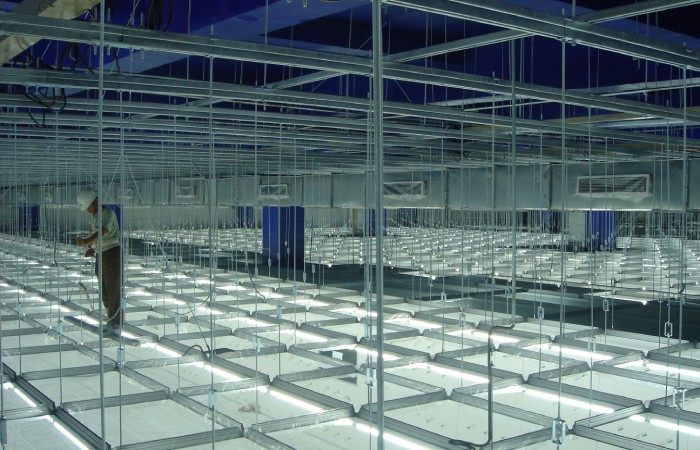
Wonclean can coordinate modular cleanroom walls, ceiling systems, FFUs, doors, windows and pass-through interfaces so the factory-built portion reduces site uncertainty instead of creating hidden rework.
ACH and Airflow
Air changes per hour help size supply airflow, but ACH alone does not prove ISO cleanliness. A room with high ACH can still fail if return paths are blocked, particle sources are uncontrolled, filters leak, or airflow short-circuits from supply to return.
ISO 14644-1 classifies cleanrooms by airborne particle concentration. ISO 14644-3 covers test methods that support verification, including airflow, pressure difference and installed filter system leakage tests. For a prefabricated semiconductor room, the practical target is to make ACH, FFU coverage and return path measurable after installation.
| Item | Why it matters | Site check |
|---|---|---|
| ACH assumption | Sets airflow capacity but not particle class by itself. | Measure supply volume, room recovery and particle results. |
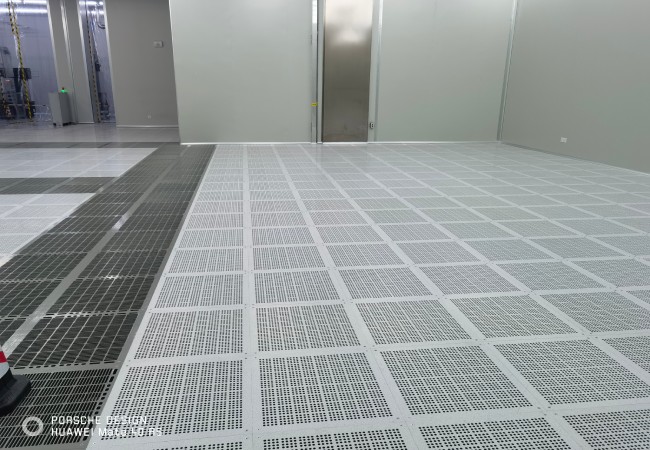
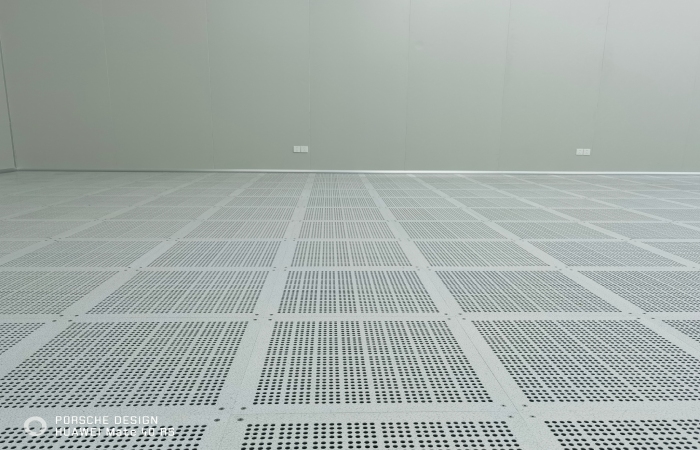
| Return path | Controls sweep pattern and pressure stability. | Verify raised floor, wall return or low return opening balance. |
| Filter installation | Leaks can bypass clean air delivery. | Perform installed filter leakage testing where specified. |
| Door and leakage control | Uncontrolled leakage breaks the pressure cascade. | Check door seals, interlocks and transfer openings. |
Pressure Zoning
Pressure zoning is not a decorative arrow on a layout. It is a leakage-controlled relationship between rooms, corridors, airlocks, process support spaces and utility chases. Semiconductor facilities often require positive pressure for particle protection, but local exhaust, chemical handling or hazardous support rooms may require a different strategy.
A prefab cleanroom should therefore define pressure setpoints, door interlocks, transfer windows, return airflow, exhaust offsets and alarm limits before the module arrives on site. If these are left until commissioning, the project may need wall penetrations or balancing changes that defeat the speed advantage.
For production areas with sensitive process tools, the pressure zoning review should include maintenance routes. A service technician opening a panel, door or raised-floor tile can temporarily change the cascade if access strategy was not considered.
Start-Up Readiness
The best prefabricated cleanroom packages leave the factory with traceable drawings and an installation logic that supports site qualification. Recommended records include material data, panel layout, ceiling grid drawings, FFU schedule, door and window details, gasket and sealant data, penetration list, electrical interface list and inspection points.
At site start-up, teams should confirm physical installation before chasing cleanroom test results: panel damage, joint finish, door swing, interlock behavior, ceiling leveling, filter seating, airflow volume, room pressure and recovery trend should be checked in a controlled sequence.
ISO 14644-16 addresses energy efficiency in cleanrooms. For semiconductor cleanrooms, early coordination of airflow and pressure can reduce the need to compensate for leakage with excess fan power.
Technical Fact Check
| Fact used | Source | Deployment implication |
|---|---|---|
| Cleanroom class is based on airborne particle concentration, not ACH alone. | ISO 14644-1 | ACH must be verified with particle testing and airflow behavior. |
| Cleanroom testing includes airflow, pressure difference and installed filter system leakage methods. | ISO 14644-3 | Prefab interfaces should be ready for measurable site tests. |
| Cleanroom design, construction and start-up should be connected. | ISO 14644-4 | Factory prefabrication should preserve documented design intent. |
| Energy-efficient cleanrooms depend on controlled airflow demand and leakage reduction. | ISO 14644-16 | Pressure zoning should not rely on excess fan power to mask leaks. |
Referenced Standards
FAQ
No. Prefabrication improves construction control, but ISO class must still be verified by particle testing under the agreed occupancy state and operating conditions.
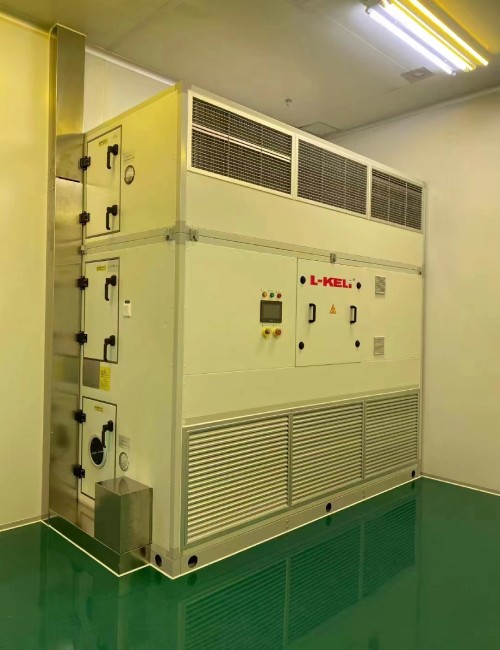
ACH is useful, but it must be paired with airflow pattern, return path, heat load, particle source control, filter selection, tool layout and pressure zoning.
Fix room layout, ISO target, ceiling grid, FFU or AHU strategy, door schedule, service penetrations, pressure cascade, material interfaces and commissioning test responsibilities.
Because panel joints, doors, returns, transfer openings and exhaust offsets are built into the package. If pressure zoning is corrected late, site rework can erase the prefabrication schedule advantage.
Wonclean Engineering Note
A successful prefabricated semiconductor cleanroom is not simply a faster wall-panel installation. It is a coordinated envelope, airflow and pressure-control system that arrives with fewer unknowns and clearer commissioning responsibilities.
Useful Wonclean references: modular cleanroom, cleanroom ceiling system, fan filter unit, contact Wonclean.

 Room JT30151, Building 4, Area B, No. 925 Yecheng Road, Industrial Zone, Shanghai,China
 Info@wonclean.com
Allen@wonclean.com
Joy@wonclean.com
Info@wonclean.com
Allen@wonclean.com
Joy@wonclean.com
 +86 13671979988(Allen)+86 15950938878(Joy)


 Online -Service

