


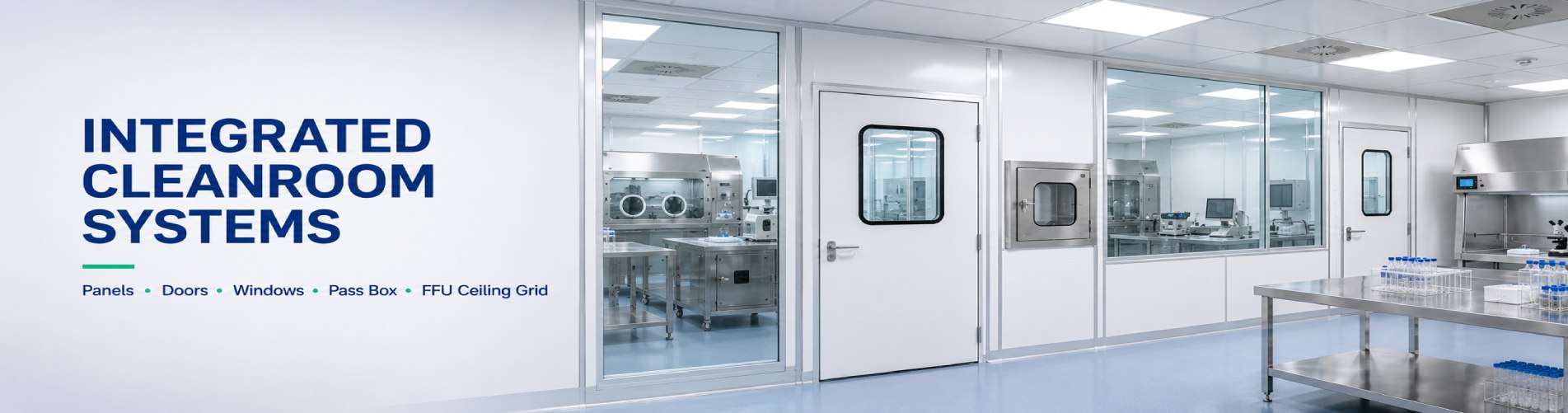
Selection Guide to Modular Pharmacy Clean Rooms for Faster Project Delivery
Procurement teams comparing modular pharmacy clean rooms should evaluate more than delivery speed. In practice, modular cleanroom construction succeeds when utilities, pressure cascade, and commissioning logic are resolved before fabrication, while modular clean room panels are selected for sealing, cleanability, and future change control, and early project engineering review is used to confirm lifting limits, site interfaces, and the validation sequence.
What Project Types Fit Modular Pharmacy Clean Rooms Best?
Modular pharmacy clean rooms fit projects where schedule certainty, repeatable construction quality, and reduced site disruption matter more than fully custom site-built sequencing. This is especially relevant for pharmaceutical production suites, compounding support areas, pilot plants, medical device packaging rooms, biotechnology support spaces, food safety laboratories, and precision instrument assembly areas that need controlled environments without long on-site construction periods.
The strongest use case is usually an expansion inside an operating facility or a new controlled space in a region with tight labor availability, difficult weather windows, or strict shutdown limits. In those situations, factory-prefabricated wall systems, cleanroom doors, cleanroom windows, and utility-ready ceiling sections can help reduce site dust, reduce wet-trade work, and shorten the sequence between room completion and commissioning.
Modular delivery is also useful when a project may later need relocation, phased expansion, or remote deployment. A container laboratory or hybrid modular annex can be appropriate for satellite testing, temporary production support, or staged capacity growth, provided the structure, transport restraints, reconnectable services, and pressure-control strategy are engineered in advance rather than improvised after delivery.
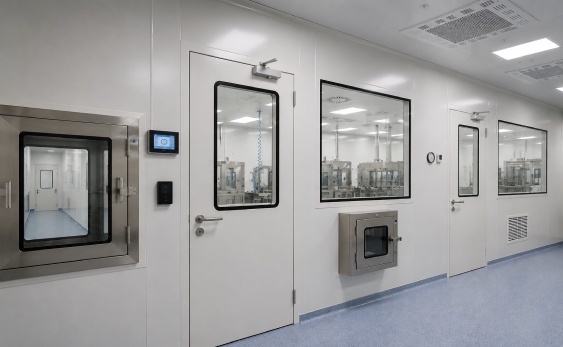
Which Technical Parameters Matter Before Approving Modular Cleanroom Construction?
The most important technical parameters are the ones that affect classification, recovery, cleanability, and operating stability after handover. For modular pharmacy clean rooms, buyers should first define the target cleanliness strategy, such as ISO Class 5 critical protection supported by ISO Class 7 or ISO Class 8 surrounding areas, together with the applicable GMP interpretation for the process and product route. When teams cite classifications, they should use the official ISO 14644 cleanroom classification terminology instead of relying on informal marketing descriptions.
Pressure and airflow should be reviewed as operating controls, not as line items on a quotation sheet. For adjacent rooms of different grades, a differential pressure of about 10–15 Pa is a common design reference, but the final setpoint should follow door use frequency, return air arrangement, containment needs, and process risk. ACH should also be justified by room function, heat load, people load, equipment load, and recovery expectations rather than copied from a generic template.
Temperature and moisture control deserve the same level of attention. Many projects start with common design references around 20–24°C and 45–60% relative humidity, yet these are not universal limits; they must match product sensitivity, operator comfort, static-control needs, cleaning chemistry, and the HVAC control range under both normal and upset conditions.
Ceiling and envelope coordination should be checked early. Common FFU and ceiling-grid coordination sizes such as 1200×1200 mm and 1200×600 mm can simplify filter layout, lighting layout, and maintenance access, but only if the grid load path, access-panel logic, and MEP openings are fixed before fabrication. For modular clean room panels, buyers should compare core options such as rock wool, magnesium oxide, aluminum honeycomb, and PU according to fire performance, weight, flatness, thermal behavior, impact resistance, and cleaning method.
Buyers should also request a written reuse and relocation statement. The useful metric is not a marketing claim about “reusability” in general, but the practical answer to how many panels, ceiling members, doors, windows, and service modules can be demounted, moved, and requalified after a layout change, and what site rework will still be required when utilities or penetrations are altered.
Why Do Procurement Teams Mis-Specify Modular Clean Room Panels and Delay the Project?
The most common mistake is treating the wall panel as a standalone product rather than as part of the cleanroom envelope. A clean room sandwich panel that looks acceptable on paper can still create leakage, cleaning difficulty, and poor maintenance access if the project does not define joint geometry, corner details, door frames, flush window interfaces, pass box penetrations, and ceiling-to-wall transitions before manufacture.
Another costly mistake is choosing by core type alone. Rock wool, MgO, aluminum honeycomb, and PU panels each solve different engineering problems, but none of them is automatically correct for every pharmacy project. Fire resistance, acoustic behavior, thermal performance, stiffness, corrosion exposure, sealing detail, and cleaning method all matter. The wrong choice can force later reinforcement, extra sealing work, or restrictions on how the room is cleaned and maintained.
Teams also lose time when they under-specify interface control for ancillary systems. If air shower positions, cleanroom partition lines, cleanroom door swing directions, window sightlines, and pass box openings are left to installation-stage decisions, the result is often re-cutting, added dust, awkward personnel flow, and longer commissioning. Faster modular delivery only works when the interfaces are frozen early enough to fabricate them correctly once.
How Should Modular Cleanroom Construction Coordinate with Ceiling Grid, HVAC, Airlocks, and Pass Boxes?
Good modular cleanroom construction coordinates all major systems around airflow, access, and maintenance. In most pharmacy projects, the cleanroom ceiling grid is not only a support frame; it is the service platform for FFU units, clean room HEPA filters, lighting, blank panels, test points, and maintenance openings. If the ceiling grid is planned late, airflow coverage, filter access, and lighting alignment often suffer.
The wall system should be coordinated with the ceiling system before fabrication release. A modular clean room panel layout should align with return-air strategy, equipment heights, door frames, flush windows, and utility penetrations so that the final room preserves pressure stability and remains easy to clean. This is also where Wonclean can support project teams by coordinating cleanroom partition details, factory prefabrication, and interface drawings before site work begins.
HVAC and pressure cascade should be reviewed together with room access logic. Cleanrooms intended for pharmaceutical use usually need a filtered supply path, appropriate return-air placement, defined recovery targets, and monitored pressure relationships. Where personnel or materials move between zones, the clean room airlock and pass box are not accessories; they are part of the contamination-control strategy. Interlocked doors, sensible transfer routes, and recovery planning are often more important than adding components after the layout is already fixed.
Air showers can also be useful, but only when they match the traffic pattern and gowning logic. In some projects, the better decision is not “more equipment” but a cleaner sequence of door control, material transfer, and monitored pressure recovery. Procurement teams should therefore ask whether the supplier has coordinated the air shower, pass box, cleanroom door, cleanroom window, and HVAC control logic into one sequence rather than pricing them as disconnected items.
What Should Procurement Teams Compare in a Selection Table?
A good comparison table should reduce ambiguity before purchase. The most useful version links each buyer concern to one recommended system, one technical check, and one clear project risk if it is ignored.
| Buyer Question | Recommended System | Key Check | Risk If Ignored |
|---|---|---|---|
| Need fast room installation in an operating plant? | Modular cleanroom construction | Module split, crane route, MEP tie-ins | Schedule slip and site rework |
| Need a cleanable and sealed wall envelope? | Modular clean room panels | Core type, flush joints, sealed penetrations | Leakage and cleaning failure |
| Need reliable filter, light, and access coordination? | Cleanroom ceiling grid | 1200×1200 / 1200×600 layout, load path | FFU clashes and poor maintenance access |
| Need remote, phased, or movable clean space? | Container laboratory | Transport frame, vibration restraint, reconnection plan | Transit damage and difficult relocation |
| Need stable pressure cascade and material flow? | HVAC, airlock, and pass box package | ACH basis, 10–15 Pa target, interlocks, return air | Contamination drift and slow recovery |
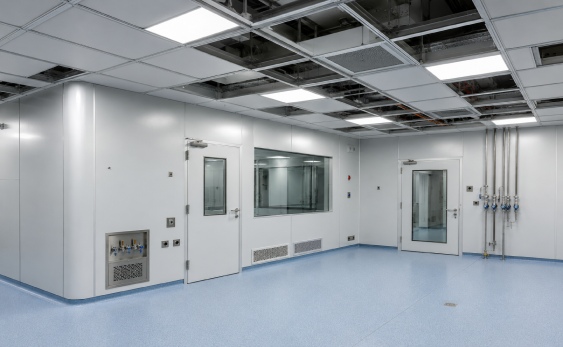
Can Faster Project Delivery Still Protect GMP Readiness?
Faster delivery can still protect GMP readiness when the project uses prefabrication to reduce site uncertainty rather than to avoid engineering. The decisive factor is whether the specification already covers classification targets, pressure cascade, door interlocks, cleanability, maintenance access, and the sequence for installation, testing, and qualification before the first module leaves the factory.
In practical terms, procurement managers should prefer suppliers that can explain how the modular envelope, cleanroom ceiling grid, HVAC interfaces, clean room sandwich panel details, and airlock or pass-box layout will be checked before installation. That approach helps reduce late-stage sealing corrections, unexpected airflow imbalances, and avoidable validation delays after the room is physically complete.
The Wonclean team helped us lock panel joints, ceiling supports, and utility interfaces before the units reached site, which reduced installation rework, improved sealing consistency, and made validation readiness easier to demonstrate during start-up.
Project Engineering Manager, Pharmaceutical Expansion Program


 Online -Service

