


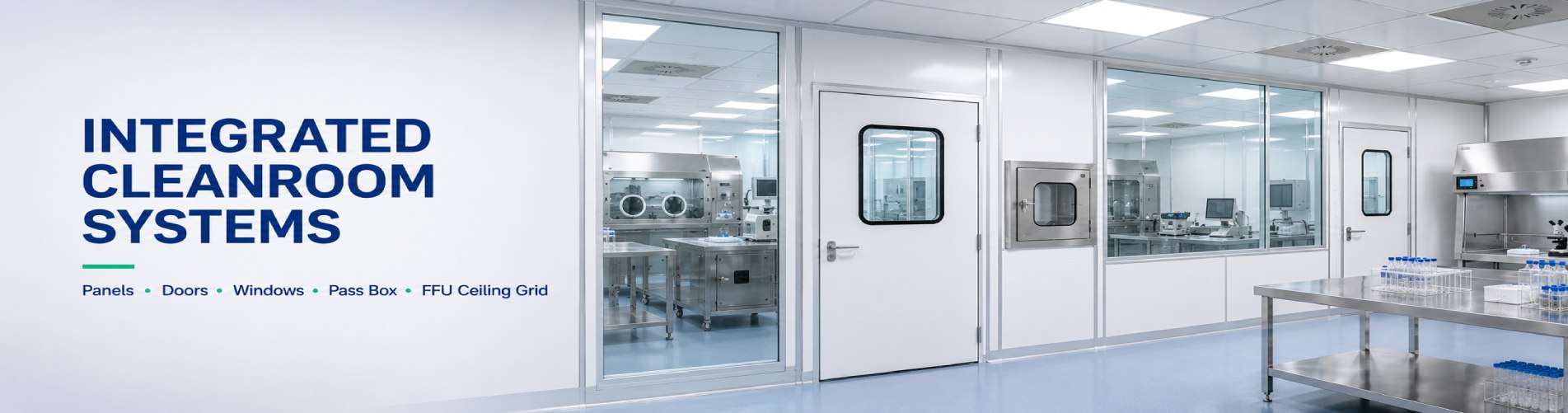

There is a lingering assumption that “modular” means “lower spec” — fine for a workshop or a softwall enclosure, but not for the clean end of semiconductor work. In practice the opposite is true: the qualities that define ISO Class 5 — airtight sealing, precise airflow, controlled surfaces — are exactly the things a factory-built, prefabricated system can deliver more consistently than a build assembled in the open.
This article sets out what ISO Class 5 actually requires, why modular construction is well suited to meeting it, and how a semiconductor-grade modular clean room is put together to reach and hold that standard.
01 — The target
What ISO Class 5 actually demands
ISO Class 5, defined by ISO 14644-1 and equivalent to the older “Class 100” and to EU GMP Grade A/B, allows no more than 3,520 particles of 0.5 µm or larger per cubic metre — around a thousand times cleaner than ordinary indoor air. Hitting that number is not about one heroic component; it is about four things working together:
- Unidirectional airflow. A near-continuous sheet of filtered air moving top-to-bottom, so particles are swept away from the work plane rather than mixed around the room.
- High filter coverage and air change. A ceiling largely filled with HEPA or ULPA filters, delivering a high, steady air-change rate.
- An airtight envelope. Walls, ceiling and joints sealed so unfiltered air cannot leak in and the pressure cascade holds.
- Controlled surfaces. Smooth, non-shedding, cleanable materials throughout, with no dust-collecting corners.
Every one of these is a property of how precisely the room is built and sealed — which is where construction method starts to matter.
02 — The case for modular
Why prefabrication suits high-classification cleanrooms
Traditional “stick-built” construction assembles a cleanroom in place, trade by trade, often in a dusty, weather-exposed shell. A modular clean room inverts that: the panels, ceiling system, filters and services are manufactured to precise tolerances in a factory and assembled on site as a coordinated kit. For ISO Class 5, that shift brings three concrete advantages.
Tighter, more repeatable sealing. The single hardest part of reaching ISO 5 is eliminating leaks. Factory-made panels with engineered gasket and gel-seal joints achieve a consistency that hand-sealing on site struggles to match — and the same detail is repeated identically across the whole envelope.
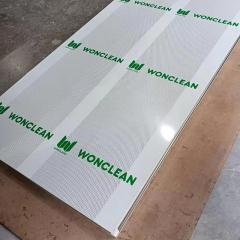
Controlled-environment quality. Components are built and pre-checked indoors, away from the dust and moisture of an open site, so the parts that have to be clean arrive clean.
Integrated, pre-engineered systems. Because the ceiling grid, fan filter units, lighting and wall interfaces are designed together as one system, the airflow and sealing are coordinated by design rather than reconciled by trades on site.
There is a quality-assurance dimension too. A factory can test, inspect and correct a panel or a filter module before it ever ships; a rework on a half-built ISO 5 room, by contrast, is disruptive and expensive. Catching issues upstream, in a controlled plant, is a large part of why prefabrication tends to produce a tighter and more predictable result at the cleanest classifications — the very classes where a single overlooked leak can keep a room from ever passing qualification.
03 — The build
How a modular clean room reaches ISO Class 5
Translating those advantages into an ISO 5 result comes down to four coordinated subsystems.
The filter ceiling
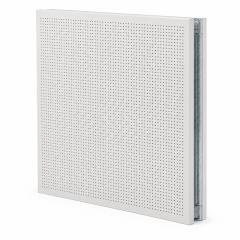
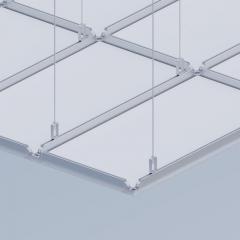
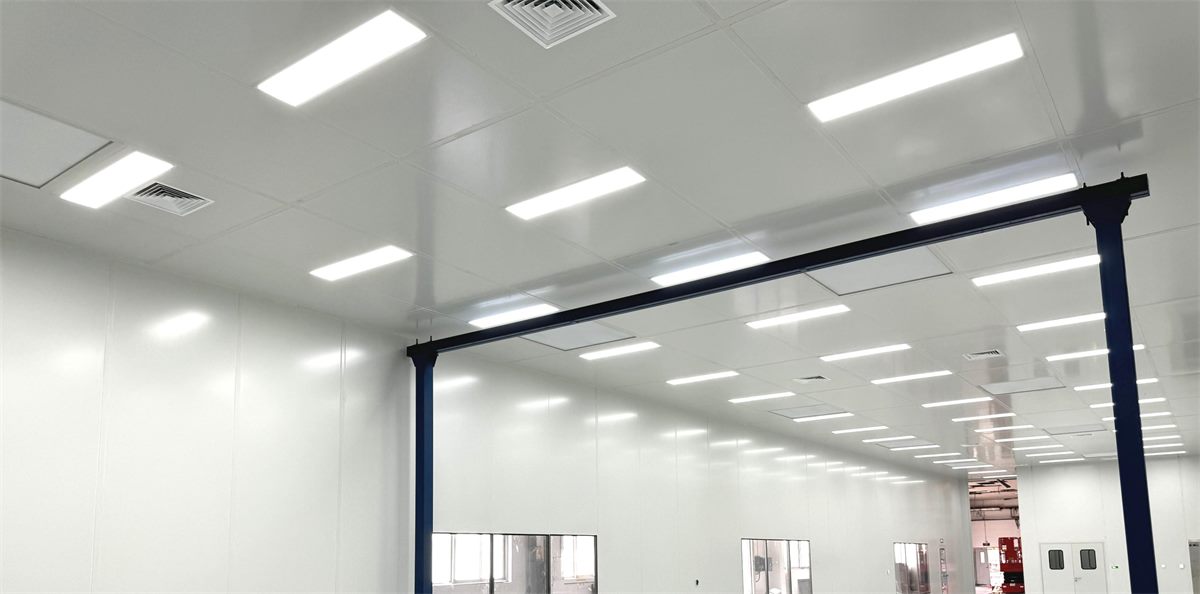
A modular ceiling grid carries a high coverage of HEPA/ULPA fan filter units to produce the unidirectional flow ISO 5 needs. Because the grid is a standardised, sealed system, coverage can be pushed high and filters can be serviced without disturbing the room below.
The sealed envelope
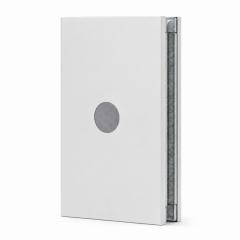
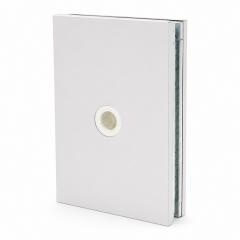
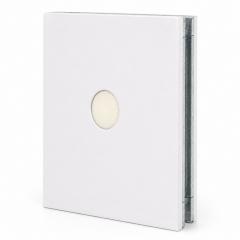
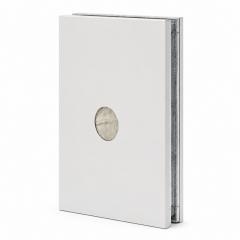
Factory-finished wall and ceiling panels with coved, gasketed joints create the airtight shell that holds the pressure cascade. A leak-tight envelope is what lets the filtered air, not infiltration, define the room’s cleanliness.
The return path
A perforated raised floor (or low-wall returns for less critical zones) completes the unidirectional loop, drawing air down and away from the work plane and back for re-filtering.
Controlled surfaces
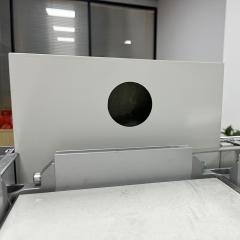
Smooth, non-shedding panel faces, flush doors and windows, and coved junctions keep particle generation and accumulation to a minimum throughout.
None of these four subsystems delivers ISO Class 5 on its own — the classification is an emergent property of all of them working together. That is the strongest argument for a modular approach: when the ceiling grid, filters, panels, doors and floor are designed and dimensioned as one product, the interfaces between them are engineered rather than improvised, and the airtight, unidirectional behaviour the standard depends on is built in from the start rather than chased after on site.
04 — The schedule
The same standard, in a fraction of the time
Reaching ISO 5 is the requirement; reaching it quickly is the advantage. Because a modular clean room is manufactured while the site is being prepared, the two timelines run in parallel rather than end to end.
Schematic — relative timelines vary by project, but the parallel path is the structural advantage of modular.
For a semiconductor maker, where a fab’s tooling generation has a limited window of value, getting a qualified ISO 5 space online sooner is not just a convenience — it is part of the return on the investment.
05 — The long view
Scalable, relocatable, and built to change
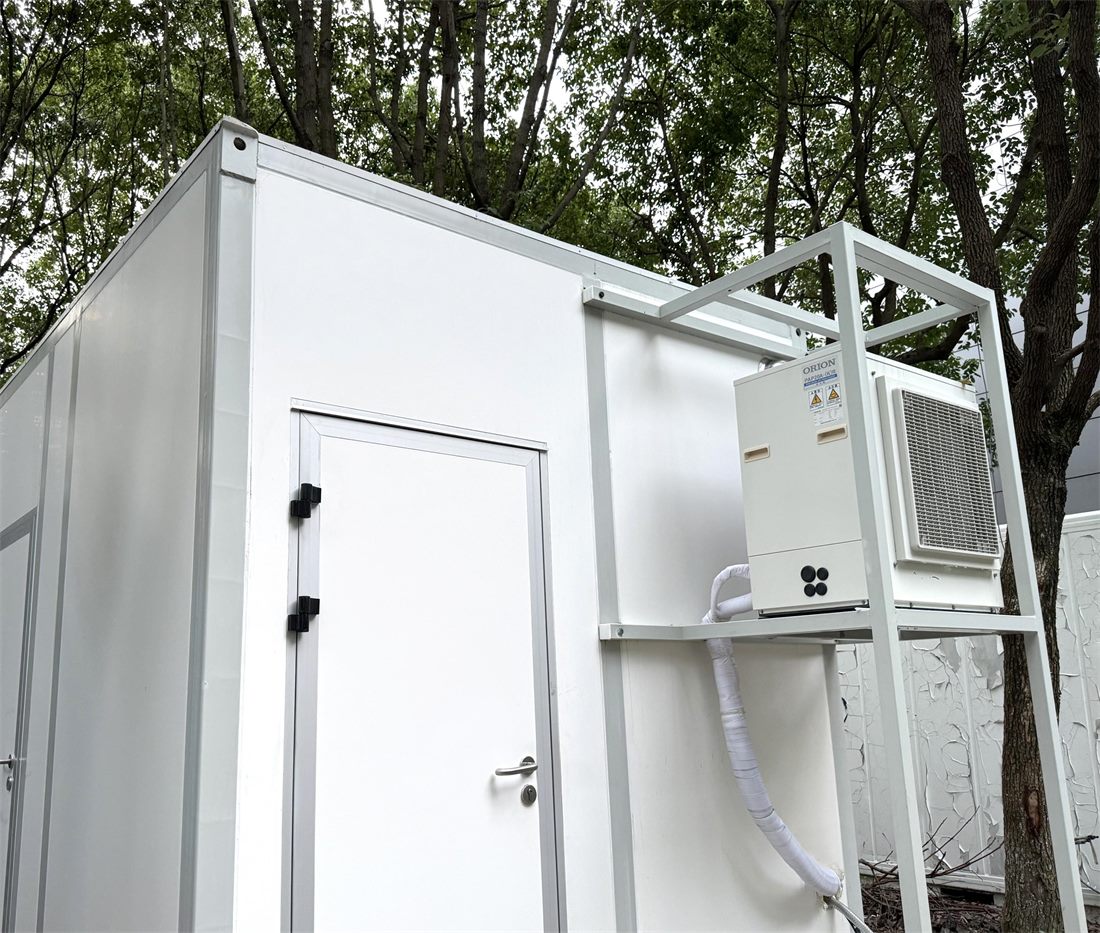
Semiconductor processes rarely stand still, and a modular approach keeps the cleanroom as adaptable as the process. A standardised envelope can be extended, reconfigured or re-balanced as nodes change, and the same engineering scales down to a compact, even portable cleanroom for pilot lines, R&D or rapid capacity, and up to full production suites.
That flexibility is a genuine differentiator of a prefabricated clean room: it can be relocated or repurposed instead of demolished, protecting the investment when the process moves on. A fixed, stick-built ISO 5 room offers none of that once it is poured into a building.
Key takeaways
- ISO Class 5 is defined by sealing, unidirectional airflow, filter coverage and controlled surfaces — all build-quality properties.
- Modular construction delivers tighter, more repeatable sealing and factory-controlled quality — a natural fit for ISO 5.
- An integrated FFU ceiling, sealed envelope and raised-floor return are how a modular room reaches the standard.
- Building in parallel with site works brings a qualified room online in weeks rather than months.
- Modular rooms are scalable and relocatable, protecting the investment as the process changes.
Planning an ISO Class 5 cleanroom?
Wonclean designs and prefabricates ISO Class 5 modular cleanrooms for semiconductor and precision-electronics work — sealed envelopes, FFU ceilings and the matching floor and services. Share your class, layout and schedule and our engineers will scope an approach.
FAQ


 Online -Service

